Content
The School of Global Integrative Studies (SGIS) offers dynamic programs in anthropology, geography, and global studies—fields that help you make sense of an interconnected world. Our courses also support students preparing for careers in education, health, forensic science, business, nonprofits (NGOs), and government service at the state and federal levels.
Explore our new courses below, along with others that may spark your interest, fit your goals, and help you satisfy college and ACE requirements. Whether you’re just starting out or planning your next steps, there’s something here for you.
Want help mapping it all out? Connect with SGIS advisor Kristin Plath to learn more about our majors and recommended course pathways.
ANTH 110
Introduction to Anthropology
Elisabeth Stone
What do we have in common, as humans, across time, over the globe, and in different circumstances? What sets us apart in our communities, cultures, careers, or pathways? Anthropology is study of humanity, in all its richness and diversity, from our earliest roots to global movements today. Learn about the strategies of anthropological research; the ways that archaeologists, linguistics, forensic anthropologists and others rely on similar frameworks to understand human behavior; and how an anthropological lens might help you in your own path and career.
What to Expect
In the online, asynchronous section of ANTH 110, students will complete textbook and outside reading and watch recorded lectures each week. They will engage with peers in weekly discussions and complete three capstone projects that allow them to get hands-on experience with the methods and goals of anthropological research within their own community.
Professional Skills
Critical thinking, close observation, drawing conclusions from data, analytical writing, and using creative writing to communicate technical concepts.
ACE 9, ACE 6, offered online
Register on MyRED
ANTH 130
Anthropology of the Great Plains
LuAnn Wandsnider
What does it take to survive—and thrive—on the Great Plains? Drawing on cultural anthropology and archaeology, this course follows the region’s peoples from its earliest Native colonizers to settlers and modern migrants. We focus on resilience, asking how individuals and communities navigate climate, conflict, opportunity, and change.
What to expect
You will complete an interview with a Great Plains resident to learn about how they have experienced the Plains. In addition, we will be "doing" anthropology each week and you will develop a portfolio of the products from these exercises.
Professional Skills
Active learning, critical thinking and analysis, teamwork, communication.
ACE 6, CAS Human Diversity in the US Communities
Register on MyRED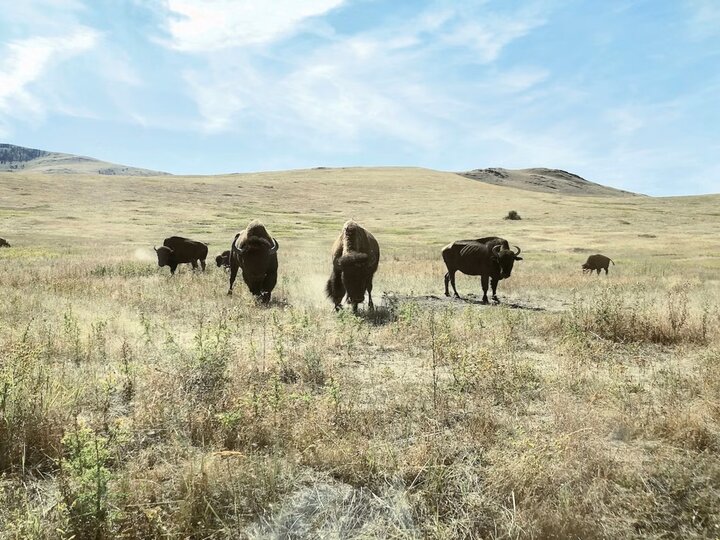
ANTH 242
Introduction to Biological Anthropology
Timothy Sefczek
Ever wonder why there is so much variation in human populations? Biological anthropology explores humans as a biological species. Using an evolutionary framework, you will learn how genetics, the study of primates, and understanding skeletal materials helps us better understand what it means to be human.
What to expect
Students will complete three exams, three quizzes, and five discussion posts. Lectures, labs, and discussions will be used to disseminate information about a variety of topics about humans, primates, and fossil ancestors of both.
Professional skills
Critical thinking.
Ace 4, Required lab/recitation
Register on MyRED
ANTH 252
World Archaeology, Global Heritage
Dr. Effie Athanassopoulos
Around 5,000 years ago, complex societies arose independently across the globe, sharing features like states, writing, monumental architecture, and organized religion. This course compares these early societies to understand how they emerged and declined—and asks enduring questions: What is heritage? Who owns the past? And why does it matter today?
What to Expect
This course includes weekly online lectures, short quizzes to reinforce key concepts, and discussion posts to engage with the material and classmates. Students will also complete a research presentation on a specific archaeological region or topic, allowing for in-depth exploration and skill development.
Professional Skills
This course builds strong global and cultural awareness by exploring societies from different times and places and learning about their traditions, values, and histories. Students strengthen their critical thinking by analyzing archaeological evidence, improve their clear and effective communication, and learn to engage thoughtfully in an interconnected world.
ACE 06: Use knowledge, theories, methods, and historical perspectives appropriate to the social sciences to understand and evaluate human behavior. ACE 09: Exhibit global awareness or knowledge of human diversity through analysis of an issue. Offered Online
Register on MyRED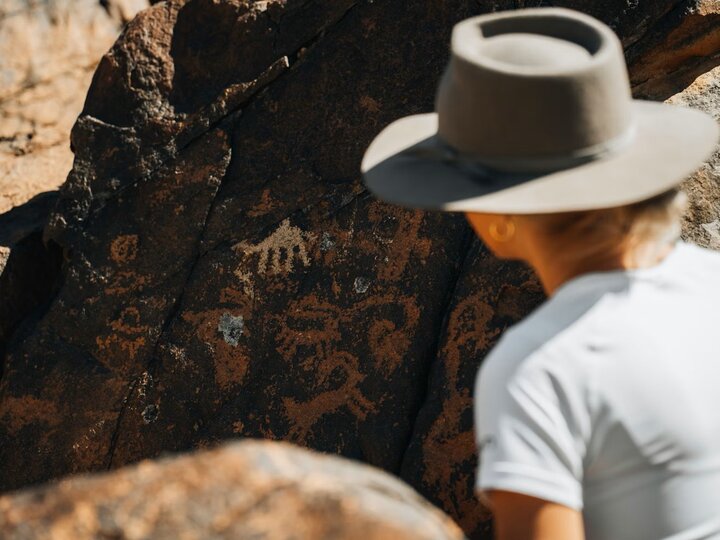
ANTH 412/812
Family, Marriage, and Kinship
Aaron Pattee
What makes a family — and who gets to define it? This course explores kinship, marriage, gender, sexuality, and reproduction across cultures, challenging assumptions about love, obligation, identity, and belonging in a rapidly changing world.
What to expect
Students will create a kinship chart and symbolic family altar, write three argumentative essays engaging anthropological theory, and complete a final research project using ethnographic or cross-cultural data. Graduate students additionally produce a professional book review and lead advanced discussion.
Professional Skills
Cultural analysis, argumentative writing, ethnographic research, theoretical application, discussion leadership.
CAS Diversity in the US
Register on MyRED
ANTH 418
Ethnology and Museums
Elisabeth Stone
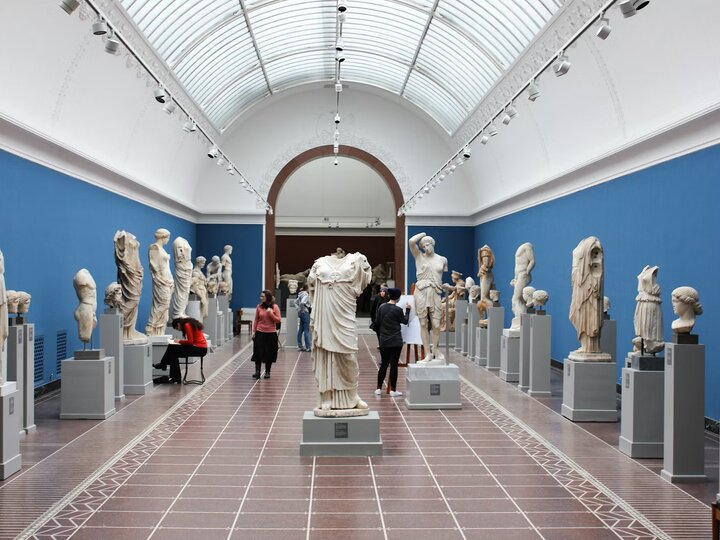
This course considers how the fields of ethnology and museum practice draw on a shared history of cultural extraction and external interpretation and how practitioners and communities push back on this legacy and transform the practices and outcomes of our work. It examines the ways that cultural representation, power, and voice are created, contested, and rejected, both in the construction of museums spaces, interpretations, and materials, as well as the ways that communities, curators, visitors, and organizations do or do not engage with the ideas, opportunities and issues of museum interpretation drawn from anthropological research. We consider a variety of strategies for deep collaboration with communities in the research, interpretation, and sharing of their stories, pasts, and futures.
What to expect
In this online, asynchronous course, students will read a range of academic and public writing on the history of cultural museums and research and interpretation and engage in discussion with peers about the impacts, strategies, audiences and outcomes of this work. Through a detailed case study, students will analyse a community-centered or community-led exhibition and will assess and articulate practices they will adopt in their own work with, in and for communities.
Professional skills
Public engagement, educational approaches for informal learning, community outreach, critical thinking and writing skills, dialog facilitation, empathy in the workplace, cross-cultural communication, and other skills needed to work with diverse audiences. They will assess the success and impact of a variety of practices of the museum field and articulate personal and professional values and philosophies for work in the cultural sector.
ANTH 431/831
Historical Archaeology: Current Topics
Dr. Effie Athanassopoulos
Historical Archaeology is a multidisciplinary field that brings together written records, oral histories, and material remains to understand the past. This course introduces key theories and methods while exploring themes such as social class, ethnicity, consumption, landscape, economic systems and global connections.
What to Expect
This course follows a mixed lecture-seminar format, with weekly discussions as a central component. In the second half of the semester, students collaborate in teams to work hands-on with archaeological collections from historic sites on the UNL campus.
Professional Skills
This course builds critical thinking, teamwork, analytical, and communication skills through discussion and hands-on work with archaeological collections. These practical skills are valuable for careers in museums, cultural resource management, education, public history, and related fields.
Provides experiential learning; ANTH 831 is one of the required courses for the Anthropology MA Professional Archaeology Specialization
ANTH 434/834
Archaeology of the Great Plains
LuAnn Wandsnider
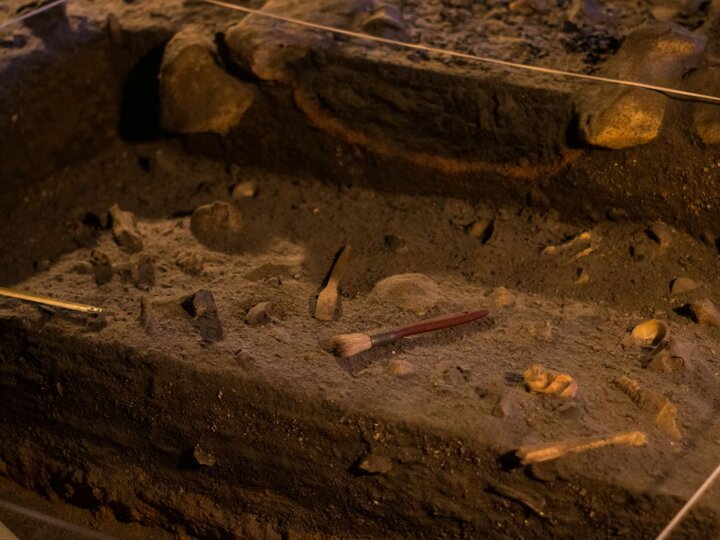
This course equips you to be an informed ally to Native partners while giving you command of Plains archaeology—from deep-time cultural sequences to today’s most exciting research questions. You’ll learn the field’s foundations, trace its evolution, and step into the conversations shaping its future.
What to expect
Quizzes and essays will keep you on track with the course material. In addition, you will collaborate to assemble an integrative portfolio for a subregion of the Great Plains along with producing a short creative work (experiment, analysis, literature review) of your choice.
Professional Skills
teamwork, communication, ethics, critical thinking, allyship
Register on MyRED
ANTH 443
Dental Anthropology
Timothy Sefczek
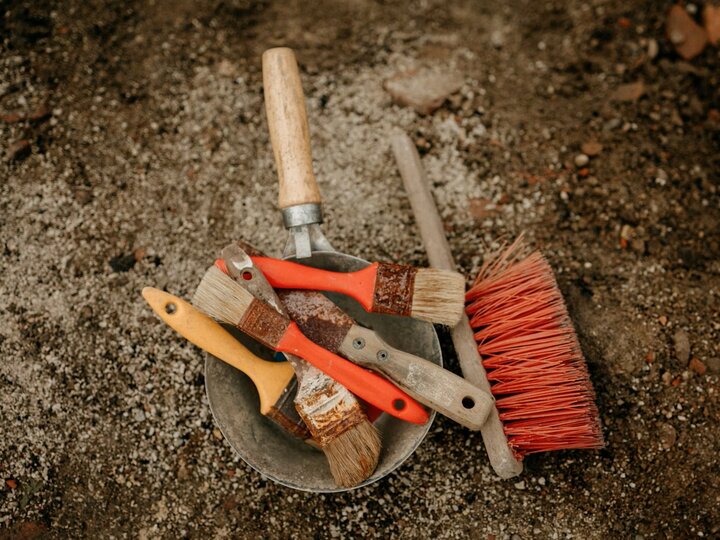
Look at those chompers! Teeth, our only outside bones, are essential to our survival. They are our immediate agents for interacting with food, and if we don't take care of them they can cause serious problems. But considering their evolution, development, and adaptability, there is so much more that they can do!
What to expect
Students will participate in labs, take four exams, five quizzes, and in class activities to demonstrate their understanding of human and non-human teeth.
Professional skills
Tooth identification, analysis

ANTH 444/844
Human Osteology
Bill Belcher
Step beyond textbook anatomy and into the laboratory science of the human skeleton. Human Osteology is an immersive, hands-on course that trains students to identify, analyze, and interpret the 206 bones of the human body with professional-level precision.
What to expect
Students can expect an intensive, hands-on laboratory course where you will learn to identify every bone and major landmark of the human skeleton while developing professional skills in skeletal analysis, age and sex estimation, and interpretation of trauma and pathology. Through structured lab work and applied case-based exercises, you will move beyond memorization to critically analyze how the human skeleton records biology, behavior, and lived experience.
Professional skills
Skeletal identification, osteometric data collection, and the construction of biological profiles, including age, sex, ancestry, and stature estimation. You will also learn to assess trauma and pathology, differentiate perimortem from postmortem damage, and apply evidence-based analytical methods in laboratory settings. Emphasis is placed on precise documentation, technical reporting, and critical interpretation of skeletal data within forensic and bioarchaeological contexts.
ANTH 455/855
Forensic Archaeology: Human Rights, Mass Burials, and Clandestine Graves
Bill Belcher
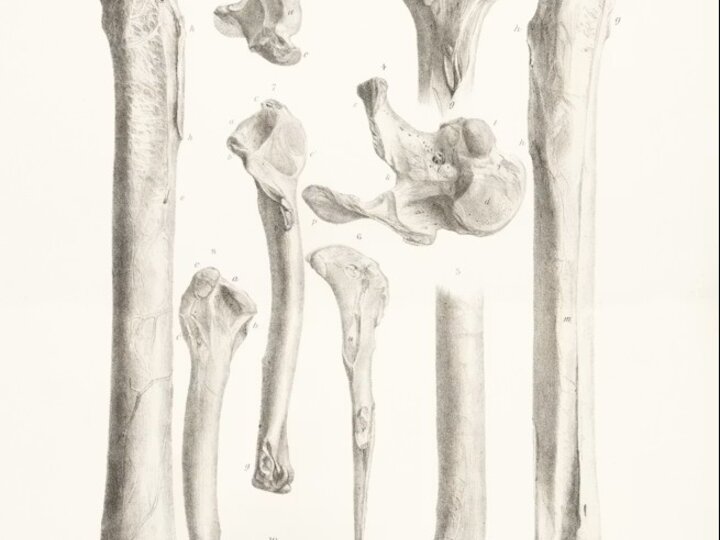
This course examines forensic archaeology through the lens of real-world case studies and global human rights investigations. Students leave the course with a nuanced understanding of how forensic archaeology operates within human rights frameworks—where science intersects with memory, justice, and the moral responsibility to bear witness.
What to expect
Students critically analyze how archaeological and forensic evidence is used to document mass violence, identify the missing, investigate war crimes, and support legal accountability in both domestic and international contexts.
Professional skills
Through detailed case studies—from Latin America to the Balkans to contemporary humanitarian crises—students explore the ethical, political, and legal dimensions of forensic investigation. The course engages questions of state violence, genocide, disappearances, structural inequality, and the role of scientists as expert witnesses. Emphasis is placed on evaluating evidence, understanding interdisciplinary collaboration, and assessing how material remains become part of truth commissions, international tribunals, and reconciliation processes.
Register on MyRED
ANTH 476/876
Human Rights, Environment and Development
Chris Heselton
Environmental challenges, economic development, and human well-being are deeply interconnected. This course explores how communities, governments, and organizations address issues such as water access, resource management, sustainability, and development through legal, policy, and institutional frameworks. Students gain a broad, global perspective on how environmental and human concerns intersect.
What to expect
Students complete a substantial research paper and conduct an in-depth evaluation of a real organization working in environmental or development policy, presenting their findings in a professional format.
Professional skills
Policy Research, Organizational Analysis, Global Systems Thinking, Evidence-Based Writing, Professional Presentation