When Catherine Day opened the email announcing she had been accepted into the Smithsonian Rural Internship Program, her first thought wasn't excitement—it was disbelief.
"I figured they made a mistake," she recalled.
They hadn't.
Day, a senior in the School of Global Integrative Studies (SGIS) at the University of Nebraska–Lincoln (UNL) majoring in anthropology, is spending ten weeks this summer at the Smithsonian's National Museum of American History in Washington, D.C., where she is conducting research in the Division of Medicine and Science while working alongside some of the nation's leading museum professionals.
Day is one of just ten students selected for the inaugural First Interstate Bank Smithsonian Internship, a new partnership between First Interstate Bank and the Smithsonian Institution that provides fully funded summer internships to students from rural communities across the bank's 10-state service region. The program was created to ensure that talented students, regardless of where they grew up, have access to transformative professional experiences at one of the world's leading museum and research institutions. Each intern receives a stipend, travel support, mentoring, and placement within a Smithsonian museum, research center, or office.
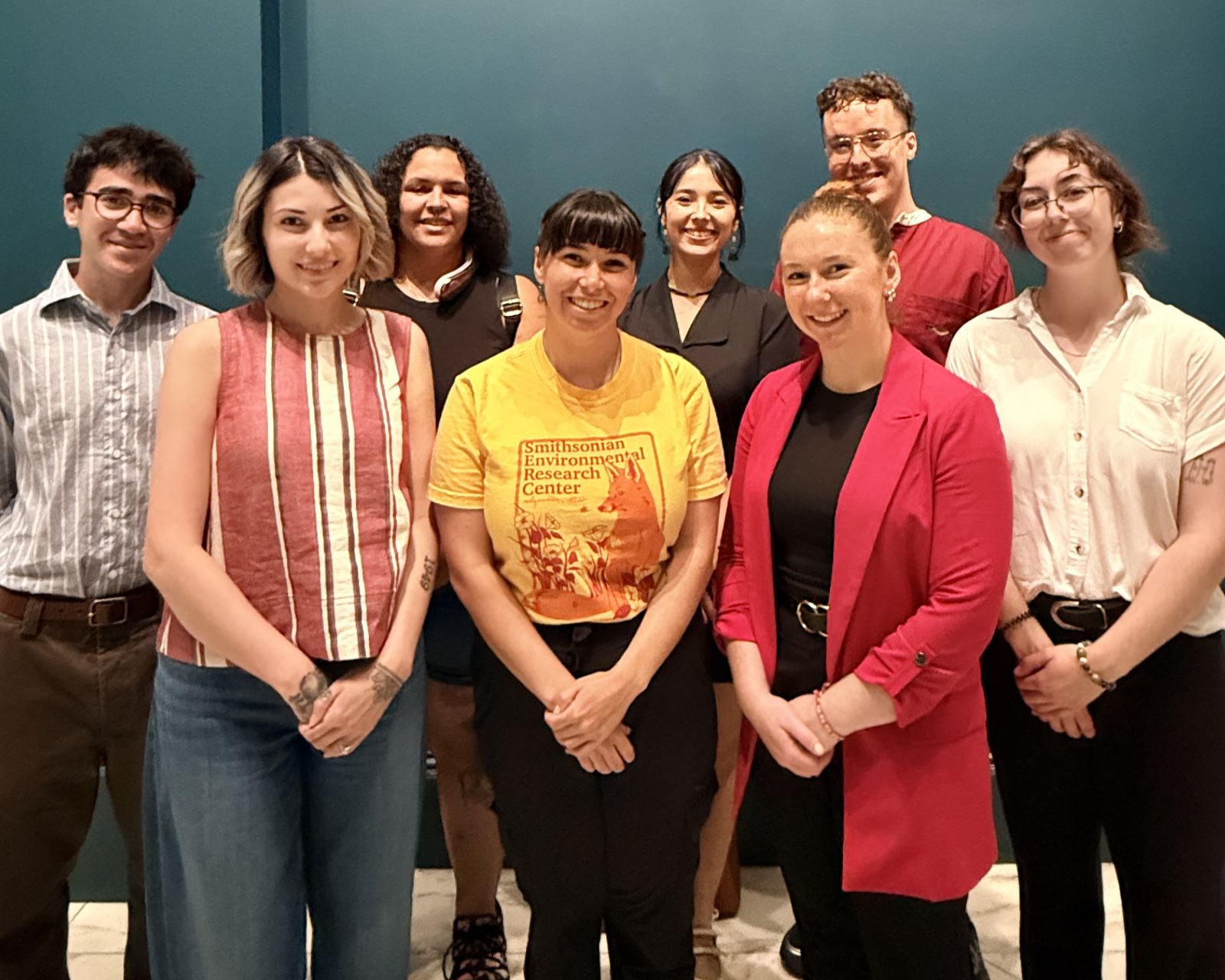
For SGIS, Day's achievement reflects the school's commitment to preparing students through interdisciplinary coursework, experiential learning, undergraduate research, and faculty mentorship that equips them to compete for nationally recognized opportunities.
Opening Doors for Rural Students
The Smithsonian Rural Internship Program was created to broaden access to opportunities that many students from rural communities might not otherwise have. Through the partnership with First Interstate Bank, interns spend ten weeks immersed in professional museum work while building national networks, developing career skills, and working alongside Smithsonian experts.
Andy Mink, director of Rural Initiatives at the Smithsonian Institution, says the program was built around a simple idea: talent exists everywhere, but opportunity does not.
"We don't want people to have to come to us," he said. "We want communities to thrive."
He noted that although the Smithsonian has a global reputation, it cannot be present in every community. Instead, the internship program invests in students who can build trusted relationships and apply what they learn to strengthen museums and communities wherever their careers take them.
For Day, the journey began with an email from her academic advisor.
"I took the chance and applied," she said. "I figured if they said no, they would tell me why so I could improve my résumé."
Instead, that application launched one of the most meaningful experiences of her undergraduate career.
Learning Beyond the Classroom
At the National Museum of American History, Day's primary responsibility is conducting research within the Division of Medicine and Science. But her days extend far beyond independent research.
A typical week includes examining museum collections, collaborating with fellow interns, and more.
"I also have discussions with my mentor and other interns about history and science," Day said. "If we're not researching, we're looking at the collections, attending workshops, volunteering, participating in meetings, or taking part in community-building activities."
One of the highlights of the summer has been participating in the Smithsonian's America 250 events commemorating the nation's upcoming semiquincentennial.
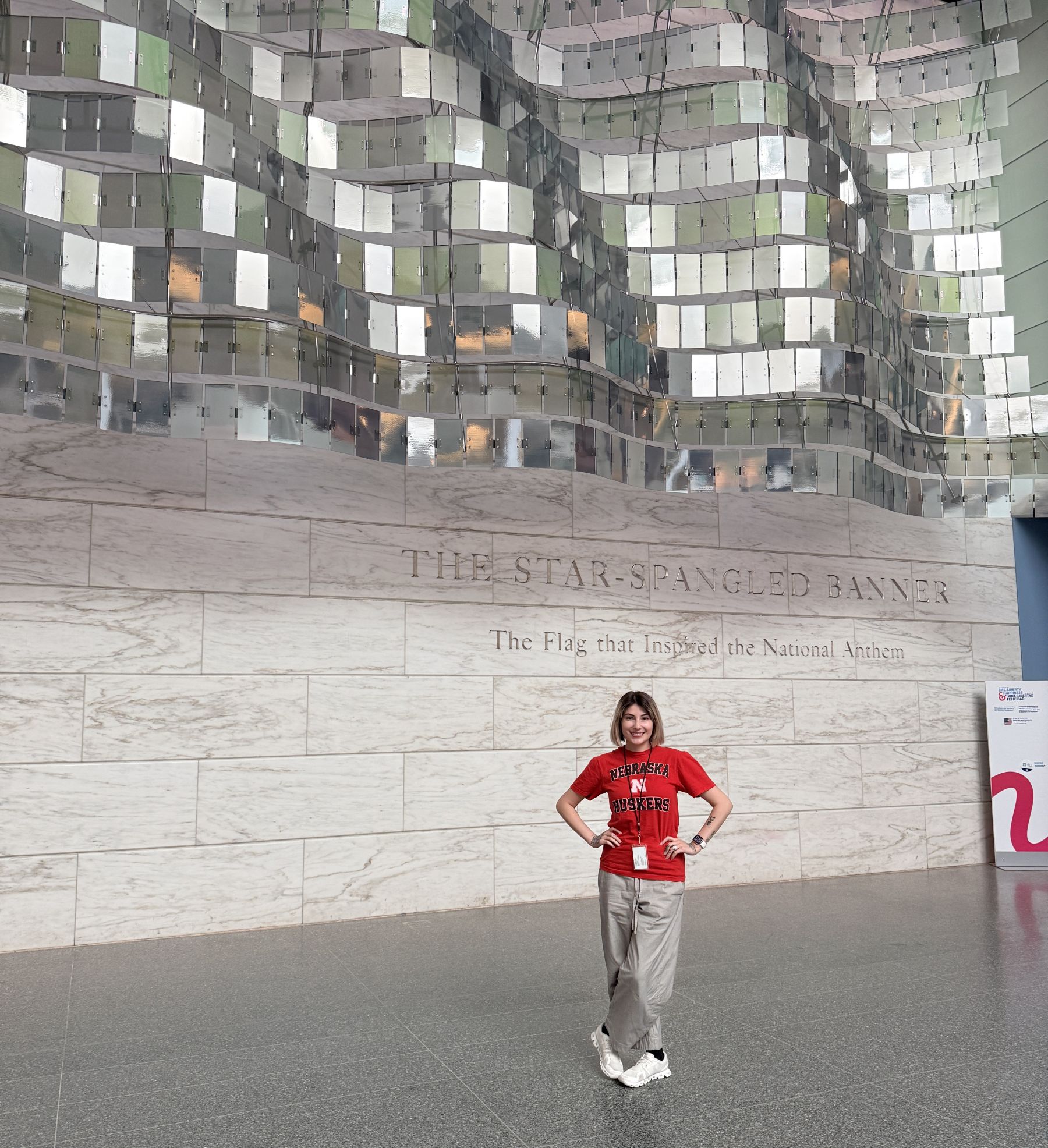
Working alongside Smithsonian professionals has reinforced her passion for museums and cultural heritage.
"Working with Smithsonian professionals has been inspiring," she said. "I have so much in common with my mentor and other colleagues."
An SGIS Education in Action
Although Washington, D.C., is more than a thousand miles from Lincoln, Day says the foundation for her success was built in SGIS classrooms.
"The courses that I took at SGIS that focus on material culture helped prepare me for my internship here at the Smithsonian," she said.
Among those experiences was ANTH 492: Stitching Cultures: US-Japan Quilt Exhibit Collaborative, an innovative museum studies course offered through SGIS in partnership with the International Quilt Museum. The course gives students hands-on experience in collections care, exhibition development, museum interpretation, and collaborative exhibition design while working alongside museum professionals and students from Japan. Associate Professor of Practice Dr. Emira Ibrahimpasic and IQM Curator of International Collections Marin Hanson co-teach the course. Day gained practical experience that complemented her classroom learning and helped prepare her for professional work at the Smithsonian.
As part of the College of Arts and Sciences (CAS), SGIS emphasizes experiential learning through museum studies, material culture, field schools, undergraduate research, and interdisciplinary coursework that allows students to connect classroom learning with real-world experience. Those opportunities gave Day both the confidence and the practical skills to contribute immediately in one of the world's most respected museum systems.
The internship has also strengthened her research abilities.
"I have gained valuable research skills that will help me when I write my thesis," she said.
Building Confidence and Career Pathways
For Smithsonian leaders, the greatest value of the internship extends beyond technical training. Mink says students leave not only with practical skills, but with professional confidence, lifelong mentors, and a network that will support them throughout their careers.
"What they gain is being in a network, working side by side with some of the world's greatest minds," he said. "They grow in their confidence about entering the professional world."
The experience has reaffirmed Day's own career aspirations. After graduation, she plans to continue working with material culture and now envisions a future in archives or collections management.
Inspiring the Next Generation of SGIS Students
Day hopes other SGIS students will pursue opportunities they may initially think are beyond their reach.
Her advice is simple.

"Include any relevant courses, workshops, volunteer hours, or field schools on your résumé," she said. "Recruiters like to see experiences that show collaboration with colleagues and other students."
Perhaps more importantly, she encourages students to take the chance, even if they aren't certain they'll be selected. Her own story is proof that sometimes the opportunity you think is out of reach is the one that changes everything.
As she spends the summer representing both the state of Nebraska and UNL at the Smithsonian Institution, Day remains grateful for the opportunity.
"I am incredibly honored and proud to have represented SGIS and Nebraska in D.C.," she said.
Her journey reflects the mission of the School of Global Integrative Studies: preparing students to become globally engaged leaders through innovative teaching, experiential learning, and meaningful mentorship. Whether conducting research in Washington, D.C., participating in field schools around the world, or engaging with communities across Nebraska, SGIS students are developing the knowledge, skills, and confidence to make an impact far beyond campus.
For Catherine Day, that journey has taken her from Nebraska to the Smithsonian, an experience that is already shaping the next chapter of her career.