As dawn broke over Madagascar's rainforest, a group of University of Nebraska–Lincoln students climbed steep mountain trails, notebooks in hand, following the calls of black-and-white ruffed lemurs through one of the world's most biologically unique forests.
For the students participating in this summer's Madagascar Field School, the experience was far more than a study abroad program. It was an immersive introduction to conservation science, primate research, and the realities of fieldwork in one of Earth's most extraordinary biodiversity hotspots.
Led by Timothy Sefczek, a lecturer in the School of Global Integrative Studies, the Madagascar Summer Field School immersed students in the science of primate behavioral ecology at the Grewcock Ihofa Vohitsara Bioreserve in partnership with the Madagascar Biodiversity Partnership (MBP). Along the way, students learned that fieldwork is as physically demanding as it is intellectually rewarding, and that conservation extends far beyond wildlife.
"Field work is not for everyone," Sefczek said. "One of my biggest goals was to give students the opportunity to discover whether this kind of work fits their interests and career aspirations. It's much better to learn that through a supportive field experience than later in a professional setting."
A Living Laboratory Unlike Anywhere Else
Madagascar is one of the world's most extraordinary biodiversity hotspots. As the fourth-largest island on Earth, roughly 90 percent of its wildlife exists nowhere else, including more than 100 species of lemurs found only on the island. For primatologists and conservation scientists, Madagascar offers unparalleled opportunities to study evolution, ecology, and conservation in action. Yet the island's remarkable biodiversity faces mounting threats. Having lost nearly half of its forests over the past century, Madagascar has become one of the world's highest conservation priorities, where protecting wildlife and supporting local communities go hand in hand.

Against this backdrop, the Madagascar Summer Field School gave students the opportunity to experience conservation firsthand. At the Grewcock Ihofa Vohitsara Bioreserve, students encountered an extraordinary diversity of wildlife while practicing the same research methods used by professional conservation scientists.
Throughout the program, students collected behavioral and ecological data using focal animal observations, scan sampling, continuous behavioral recording, botanical plot sampling, and both daytime and nighttime line transect surveys. Rather than observing animals in controlled settings, students followed wild lemurs through steep mountain forests, adapting their methods to constantly changing conditions.
"I wanted students to experience how different field research is from learning these techniques in a classroom," Sefczek explained. "Following wild animals requires constant attention, flexibility, and critical thinking. It teaches students both the science and the realities of doing research in the field."
Following Lemurs Through the Rainforest
For anthropology student Anna Belle Bryant, the experience fulfilled a dream years in the making.
After taking Sefczek's "ANTH 341: Primate Behavior and Ecology" course, Bryant knew she wanted to study biological anthropology in the field.
"I haven't stopped dreaming about this study abroad since," Bryant said. "I knew my main interest lay within biological anthropology, but that class gave me a new appreciation for the role primates play in understanding humanity--and how our actions affect their behavior and environments."
Every day brought new challenges. Students rose before dawn for diurnal surveys, hiking rugged transects through dense rainforest while recording observations on black-and-white ruffed lemurs. Other days stretched well past midnight as students conducted nocturnal surveys in hopes of observing Madagascar's elusive nocturnal species.
"It was pretty hard work," Bryant said. "Huge climbs and steep descents while tracking a black-and-white ruffed lemur that was twice as fast as you, jumping through the trees. It was everything I could've dreamed of."
For Fisheries and Wildlife major and Anthropology minor Sophia Rojas, seeing Madagascar's wildlife firsthand exceeded every expectation.
"My favorite experience was observing black-and-white ruffed lemurs in the continuous forest," she said. "Their vocalizations, group dynamics, and movement through the canopy were unforgettable."
One encounter stands above the rest.
"Seeing an indri for the first time was surreal," Rojas said. "Their calls echo through the forest in a way that feels ancient and almost spiritual."
Over the course of the field school, students observed eight species of lemurs, including indri, diademed sifaka, greater bamboo lemurs, sportive lemurs, mouse lemurs, woolly lemurs, brown lemurs, and black-and-white ruffed lemurs.
Conservation Happens with Communities
While studying Madagascar's remarkable biodiversity was the central focus of the field school, students quickly discovered that successful conservation depends just as much on people as it does on wildlife. Throughout the program, they saw firsthand that protecting forests and endangered species is inseparable from supporting the communities that call those landscapes home.
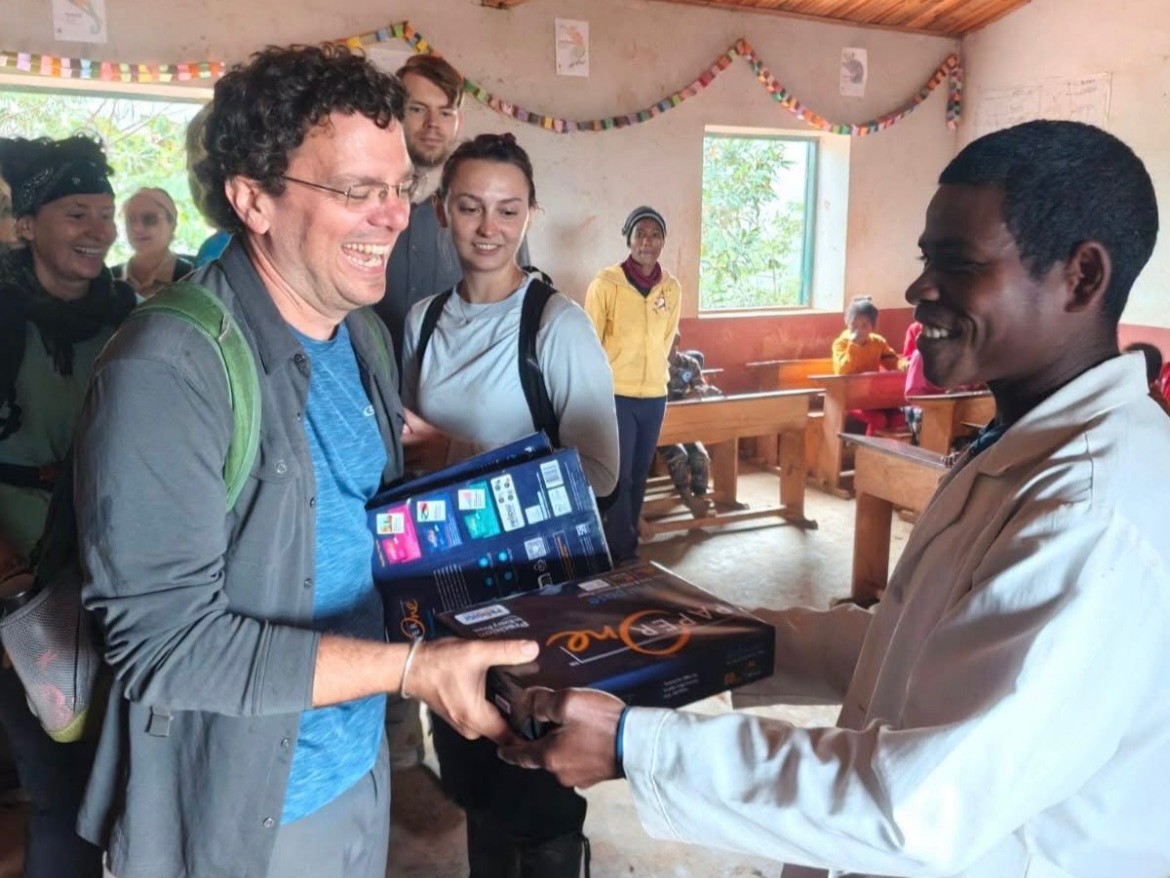
The group visited a local village school, where they learned about daily life for children and teachers living near the forest. Some students walk miles each day to attend school, while teachers often continue educating despite inconsistent pay. The visit offered an important glimpse into the resilience of the communities whose futures are closely tied to the health of Madagascar's forests.
Students also participated in a community-led reforestation project, hiking across a barren hillside carrying trays of native seedlings before joining local villagers in planting approximately 2,000 trees. From the ridge, they could see the striking contrast between isolated patches of rainforest and the surrounding deforested landscape--a vivid reminder of both the scale of the challenge and the hope offered by community-driven restoration efforts.
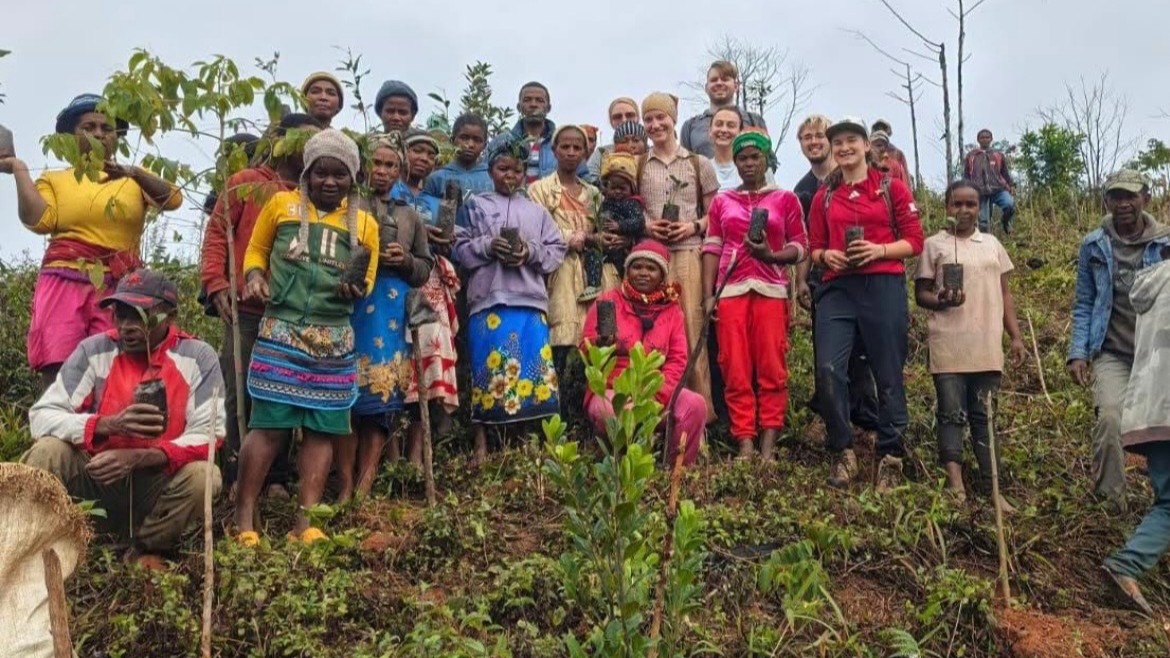
"Seeing conservation work happening on the ground--from reforestation to community engagement--made me realize how interconnected conservation is with local livelihoods, culture, and long-term sustainability," Rojas said.
For Sefczek, experiences like these are an essential part of the field school.
"I think students came away understanding that local communities are deeply invested in conservation," he said. "While outside organizations can provide financial support, it's the local communities who make conservation happen every day."
Learning Beyond the Classroom
Although students gained valuable technical skills, many described the personal growth as equally significant.
Navigating unfamiliar forests after dark, adapting to physically demanding hikes, learning basic Malagasy, and building relationships with local guides pushed students well outside their comfort zones.
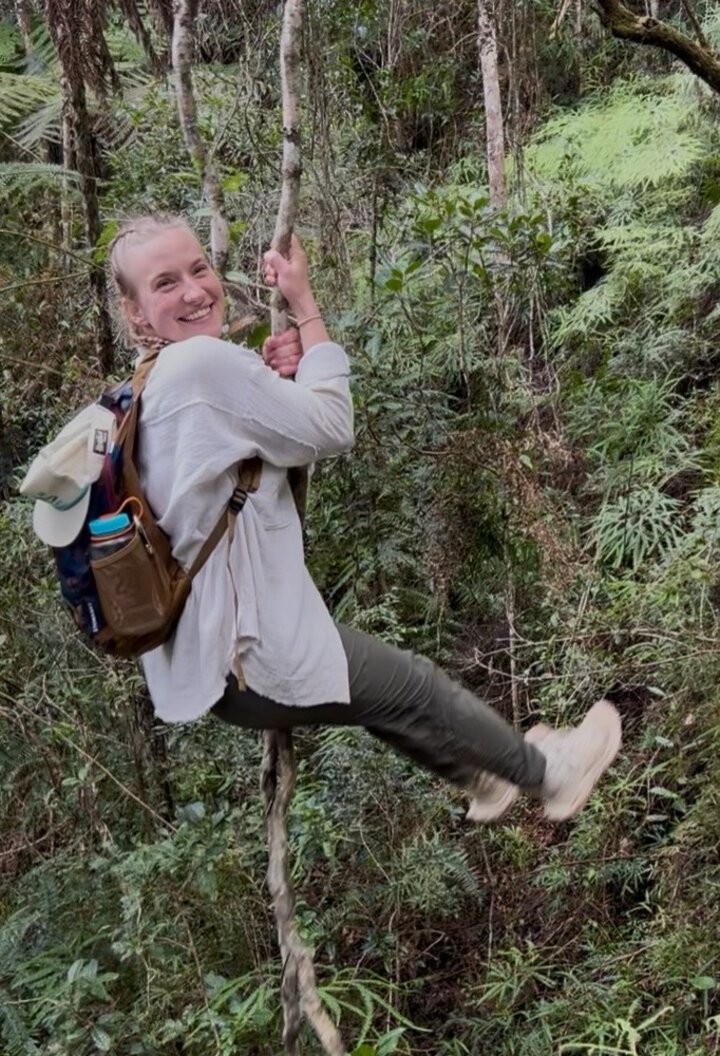
"The nocturnal surveys pushed me outside my comfort zone," Rojas said. "Navigating the forest at night, relying on the expertise of our guides, and embracing uncertainty taught me to trust the process and stay adaptable."
Bryant found that even evenings around the campfire became meaningful learning experiences.
"After dinner, many of us gathered around the fire with our guides and their families to practice Malagasy and talk about the day's adventures," she said.
The field school concluded in Antananarivo during Madagascar's Independence Day celebrations, giving students an opportunity to experience another side of Malagasy culture through markets, galleries, and community festivities.
Confirming Career Paths
For many students, the experience reinforced long-term career goals.
"This experience made me realize that I'm right on track," Bryant said. "This fall I'll begin my master's degree in biological anthropology, and after working in Madagascar and archaeological fieldwork this summer, I know I belong in the field."
Rojas said the experience strengthened her commitment to international conservation.
"This field school solidified my passion for conservation and primate ecology," she said. "It gave me confidence that I want to continue working internationally."
Sefczek hopes that confidence is one of the program's lasting impacts.
"They now have the opportunity to say, 'I've done this work, and I know I want to keep doing it,'" he said. "That's something that truly sets students apart. More importantly, they've learned something about themselves that simply can't be taught in a classroom."
For students considering future field schools, both participants offer the same advice.
"Do it," Rojas said. "If you're passionate about wildlife, conservation, or field research, this program will change you. It's challenging, immersive, and incredibly rewarding."
For Bryant, the memories are equally enduring.
"I miss the lemurs almost as much as I miss my favorite Malagasy dish, ravitoto," she laughed.
Some experiences stay with students long after they leave the forest--and for the participants in this year's Madagascar Summer Field School, the echoes of lemur calls, rainforest trails, and community partnerships will continue shaping their careers for years to come.