A University of Nebraska–Lincoln anthropology alumnus is applying his training to expand access to higher education in one of the most remote and culturally diverse regions of the world.
Zachary Garfield (BA ’12, anthropology, psychology) is an evolutionary anthropologist whose work examines how culture, cooperation, and social systems shape human lives. After graduating from Nebraska, he went on to earn his master’s and Ph.D. in anthropology at Washington State University and has built an international research career grounded in long-term, community-engaged fieldwork.
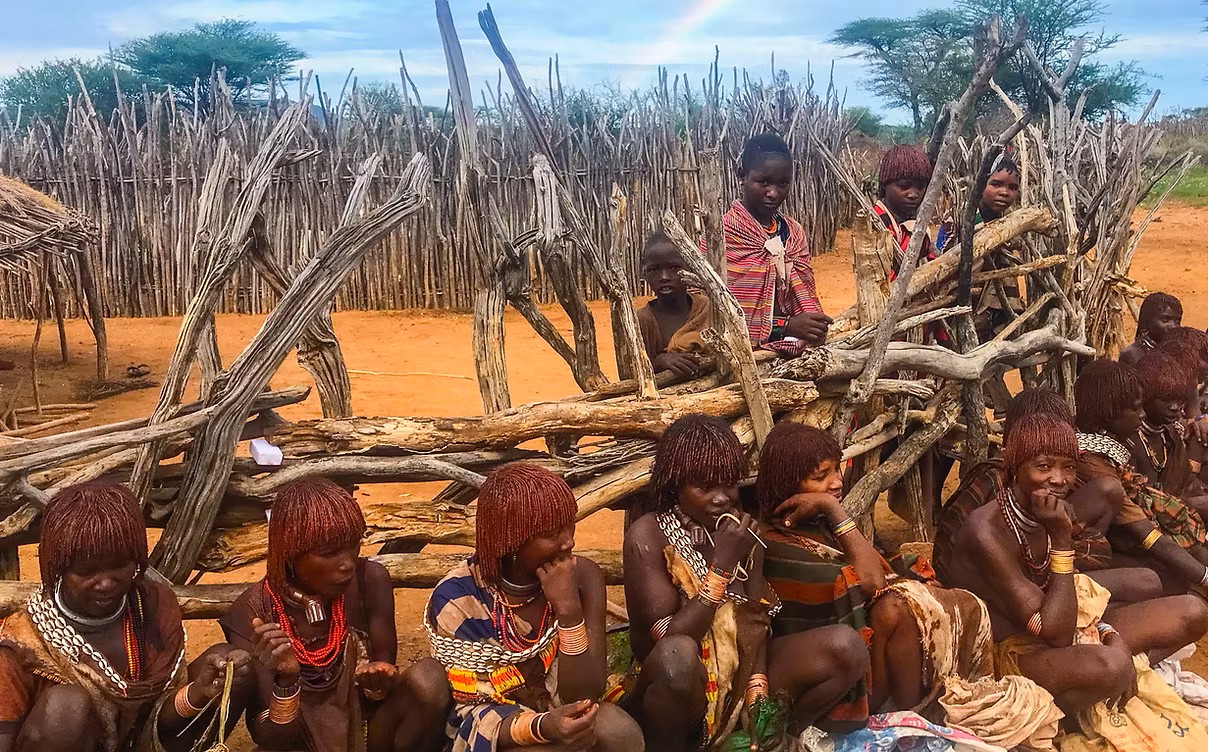
For more than a decade, Garfield has worked in Southwest Ethiopia’s Omo Valley, collaborating with pastoralist and forager communities to better understand social organization, inequality, and cultural change. That anthropological foundation—built on deep relationships, fieldwork, and cultural understanding—led him to co-found the Omo Valley Research Project (OVRP), a nonprofit that connects research with real-world impact.
Anthropology in action
OVRP reflects a core principle of anthropology: that research should be grounded in, and responsive to, the communities it studies.
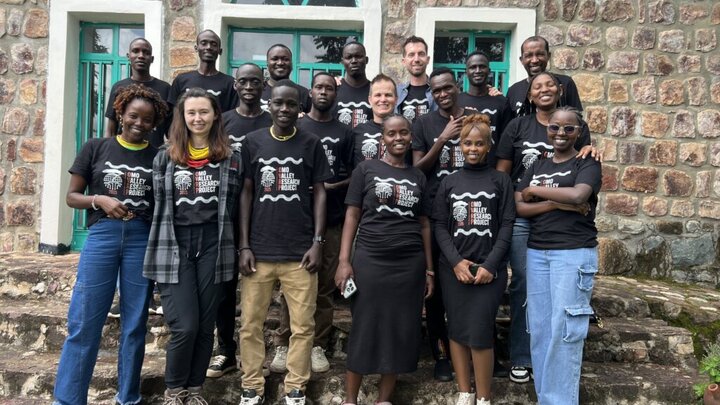
In addition to ongoing interdisciplinary research, the project supports local initiatives in education, health, and community development. One of its central efforts is a scholarship program for students from the Omo Valley, where access to higher education is often limited by geography, infrastructure, and cost.
Many of the students supported are the first in their families, and sometimes their communities, to complete high school or attend university. With scholarship support, they are pursuing degrees in medicine, biology, public health, and veterinary science—fields that directly address community needs.
The impact is already visible:
- Students are becoming healthcare providers in regions with limited access to medical care
- Others are earning competitive international scholarships
- First-generation students are creating new educational pathways for those who follow
A Nebraska foundation
Garfield’s path into anthropology began at Nebraska, where he trained under emeritus professor Raymond Hames. As both an Undergraduate Creative Activities and Research Experience (UCARE) participant and McNair Scholar, he conducted undergraduate research in anthropology while also studying psychology, developing the interdisciplinary, fieldwork-driven approach that continues to shape his work today.
As an undergraduate, he presented research at the Nebraska Academy of Sciences and served as the president of AnthroGroup. He has since returned to UNL as an invited speaker, maintaining strong ties to the academic community that helped launch his career.
A first-generation college student, Garfield brings a personal understanding of the transformative power of education. That perspective informs OVRP’s mission to support students facing structural barriers to higher education.
A growing need
As awareness of OVRP’s scholarship program has grown, so too has demand. The organization is now receiving more qualified applicants than it can support, leaving some students at risk of being unable to continue their education.
OVRP is entirely volunteer-run, and every dollar raised goes directly to students. A contribution of $975 supports a full year of university expenses, including tuition, housing, food, books, and transportation, while $82 can sustain a student for one month.
Without additional funding, some students may be forced to leave because of financial constraints.
From anthropology to impact
Garfield’s work demonstrates how anthropology can extend beyond the classroom, connecting research, education, and community engagement to address real-world challenges.
From Lincoln to Ethiopia, his work reflects the global reach of a Nebraska education and the power of anthropology to create meaningful, lasting change.